Why I built it
Job hunting meant revisiting the same career pages, checking whether old links still worked, and making the same fit judgment on every new role. I wanted a place to keep the search moving without rebuilding that context each time.
What it does
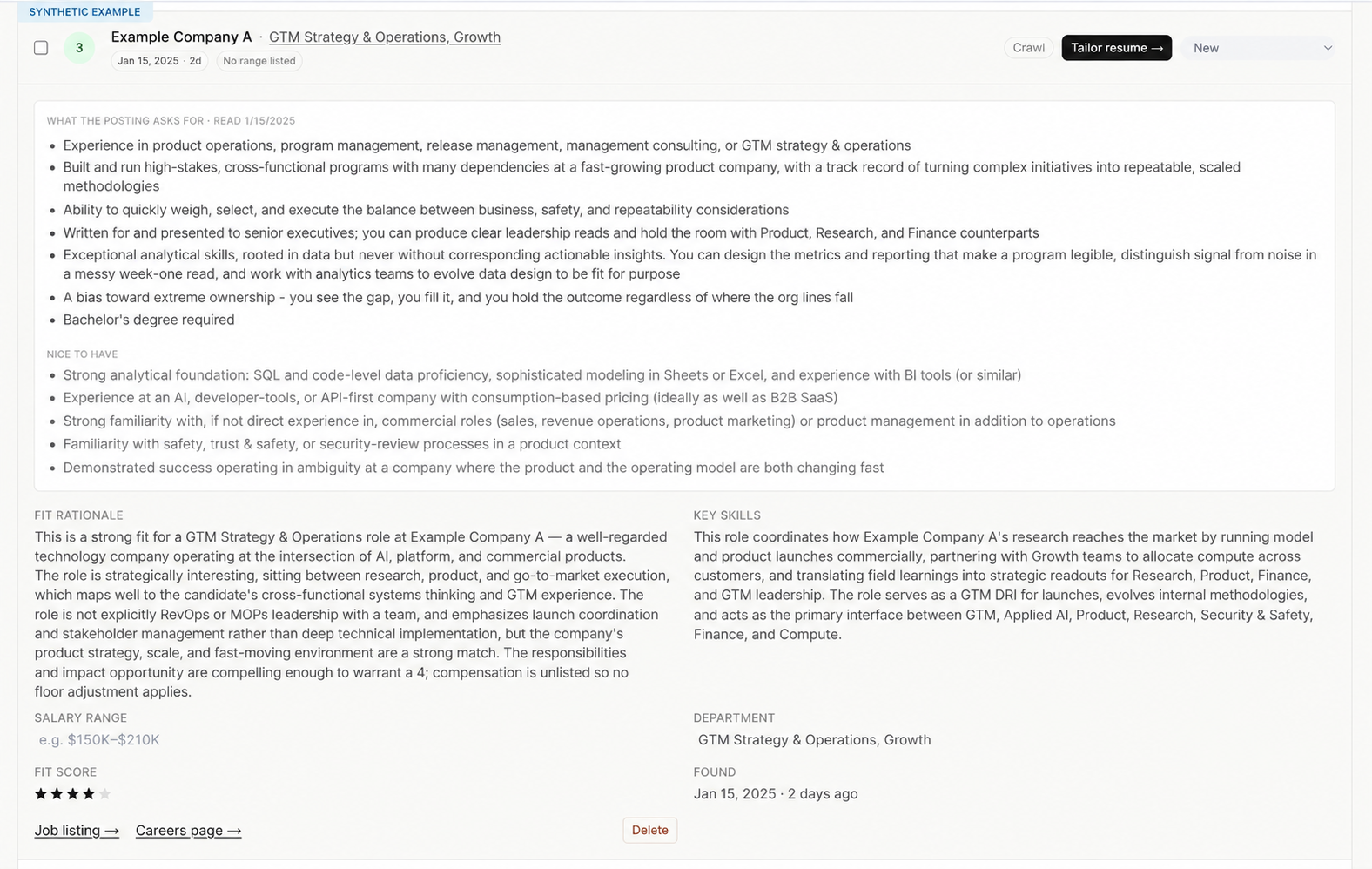
Job Search helps discover employers and roles, watches selected company career pages, and scores openings against an editable profile. Roles go into a pipeline where I can track applications, interviews, notes, and decisions. Each user has a separate profile, so the search can fit their own career. It looks for the employer’s original listing and saves the requirements and nice-to-haves from postings it can read. Those details sit beside the fit rationale and key skills, giving résumé tailoring specific information about what the role calls for.
What I built
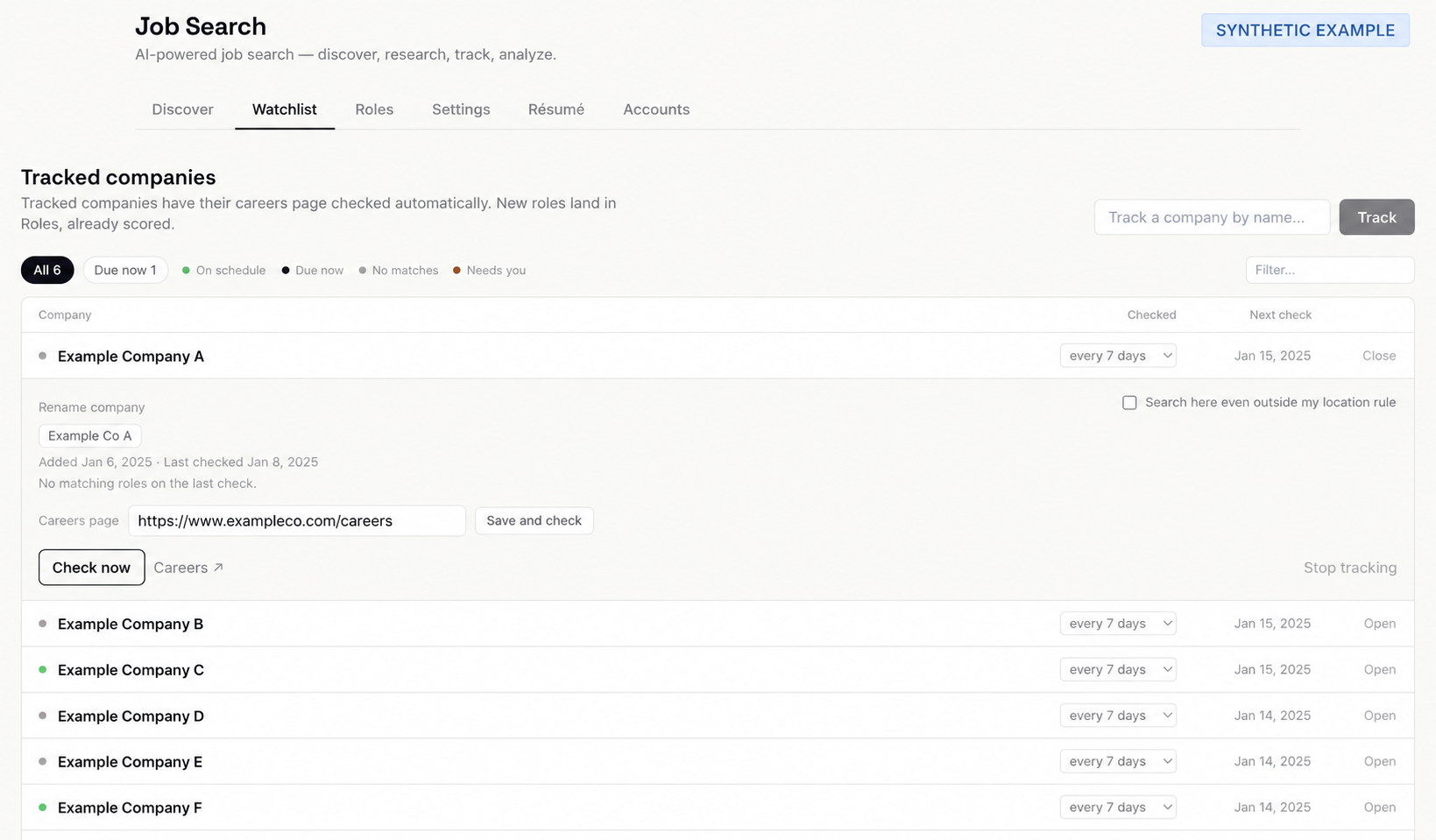
A Next.js app with scheduled company checks, AI-assisted discovery and fit scoring, and a Postgres-backed pipeline. Link checks distinguish a missing posting from an uncertain response or a redirect to a general careers page. The résumé builder uses my TK Resume Design System from Claude Design for document styling, layout, and rendering. I can tailor a draft, edit it, and save versions for each application; the résumé workspace currently has restricted access.
What I learned
The biggest shift was treating my résumé as structured data. In JSON, a bullet can hold more than its wording: it can carry tags for leadership, data, operations, or building systems, along with its role and priority. That gave AI more to work with. It reads a job description for those dimensions, then the app selects and orders matching bullets from my broader career record. One accomplishment can speak to several kinds of work, so I can draw a different résumé from the same library for each role.
Keep the search moving.
Follow the companies I care about, track each role, and bring the posting’s requirements into résumé tailoring.
Keep an eye on the right companies.
Set how often a company’s careers page is checked, see when the next check is due, and open the details when something needs attention. AI-generated illustration with synthetic data.
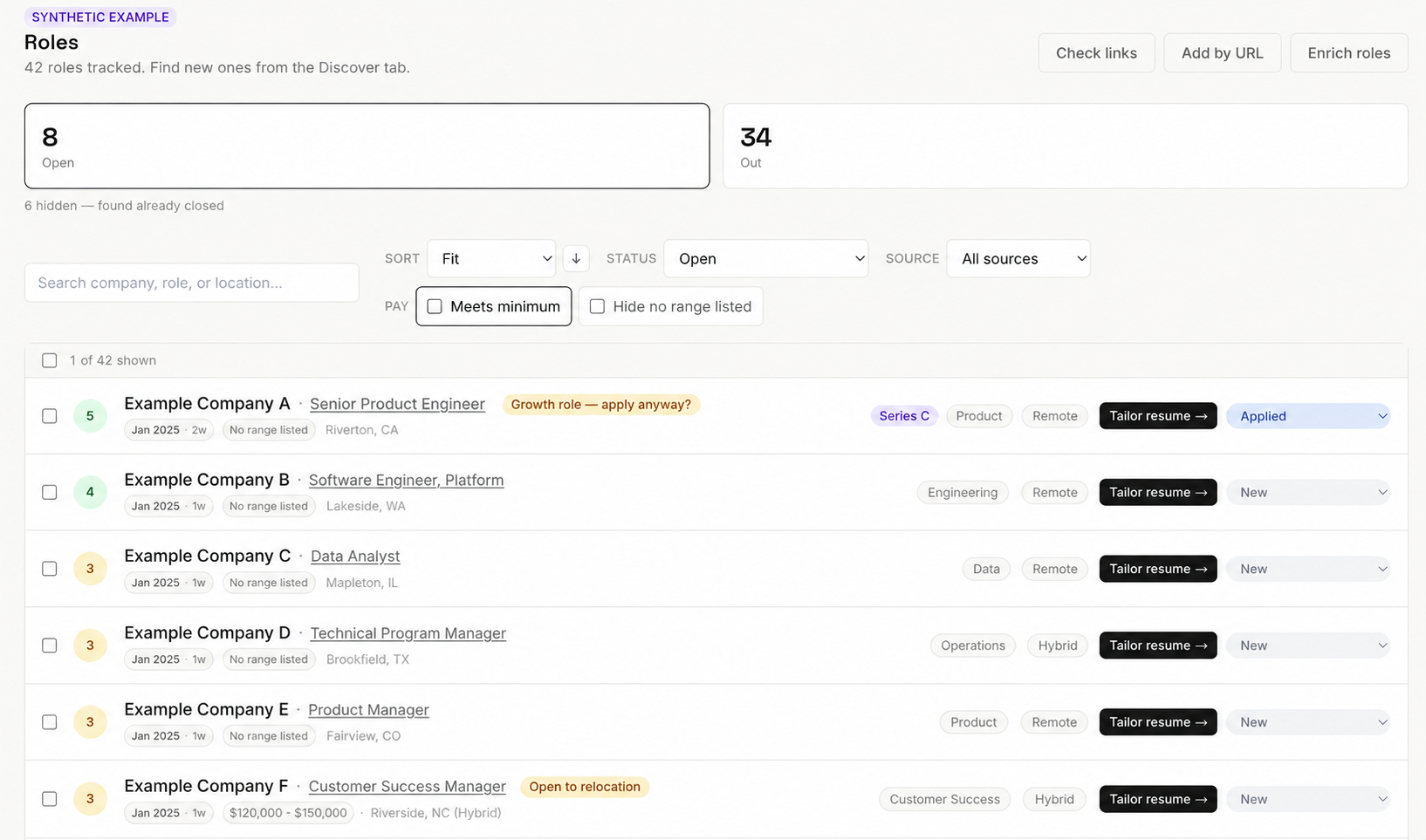
Turn an opening into a next step.
Review fit scores, filter the roles worth a closer look, and keep application status beside the original posting. AI-generated illustration with synthetic data.
Start with what the job asks for.
The expanded role brings together requirements, nice-to-haves, key skills, and the fit rationale. That saved context guides which career themes and résumé bullets get emphasis when I choose Tailor resume. AI-generated illustration with synthetic data.